
The commercial cleaning and facility management sectors are undergoing an intense digital transformation. Driven by persistent macroeconomic labor shortages, rising regulatory hygiene mandates, and strict corporate sustainability initiatives, the industry has rapidly shifted away from manual, checklist-based maintenance routines.
Instead, modern commercial sanitation relies on an interconnected ecosystem powered by Artificial Intelligence (AI), autonomous robotics, and the Internet of Things (IoT).
The deployment of the Internet of Things (IoT) has effectively converted static facility structures into intelligent, data-generating environments. Smart sensors deployed across commercial facilities continuously harvest real-time operational data.
For example, ultrasonic and gas sensors embedded within smart waste systems monitor absolute trash fill-levels and internal environmental changes, sending immediate alerts to central cloud servers via low-power wireless connections.
Similarly, automated monitoring systems use specialized cameras and localized motion sensors to objectively audit hand-hygiene behaviors and dispenser levels in sensitive healthcare settings around the clock. This constant streaming of data eliminates the need for arbitrary, manual inspect-by-the-clock rounds.
Artificial Intelligence functions as the predictive and analytical brain of this framework. Rather than acting on static schedules such as vacuuming a terminal every day at 9:00 PM, AI machine learning engines synthesize real-time data inputs from IoT sensors alongside historical foot-traffic patterns and external variables.
This allows facilities managers to transition to a dynamic, predictive maintenance model. AI routing engines can forecast precisely when a specific high-traffic zone requires sanitation or waste clearing, automatically optimizing staff workflows, reducing technician idle time, and significantly curbing resource consumption.
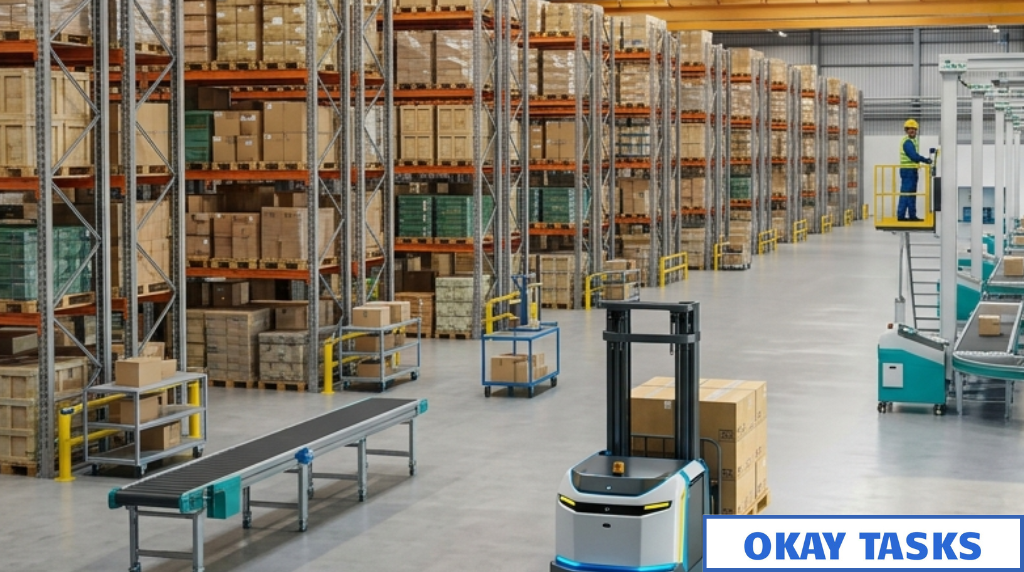
Physical execution is increasingly delegated to automated hardware and Collaborative Robots (cobots).
Autonomous floor scrubbers and specialized UV-C disinfection robots work alongside human staff to handle repetitive, large-scale cleaning tasks across expansive areas like airport terminals, corporate high-rises, and hospitals. Equipped with advanced LiDAR navigation and computer vision, these machines safely maneuver around dynamic obstacles while delivering a highly consistent clean.
By offloading heavy, repetitive tasks to autonomous systems, human janitorial staff can focus on high-precision touchpoints and complex detailing.
This technological integration not only addresses critical labor gaps but elevates overall public health outcomes through verifiable, data-backed sanitation.
Say Okay to Every Cleaning Task
Okay Tasks is the premier solution for residential and commercial cleaning in Malaysia. Whether it’s a last-minute on-demand request or a scheduled deep clean, the app connects you with verified vendors to ensure your space shines with professional excellence.
- Download Okay Tasks on the App Store or Google Play.