
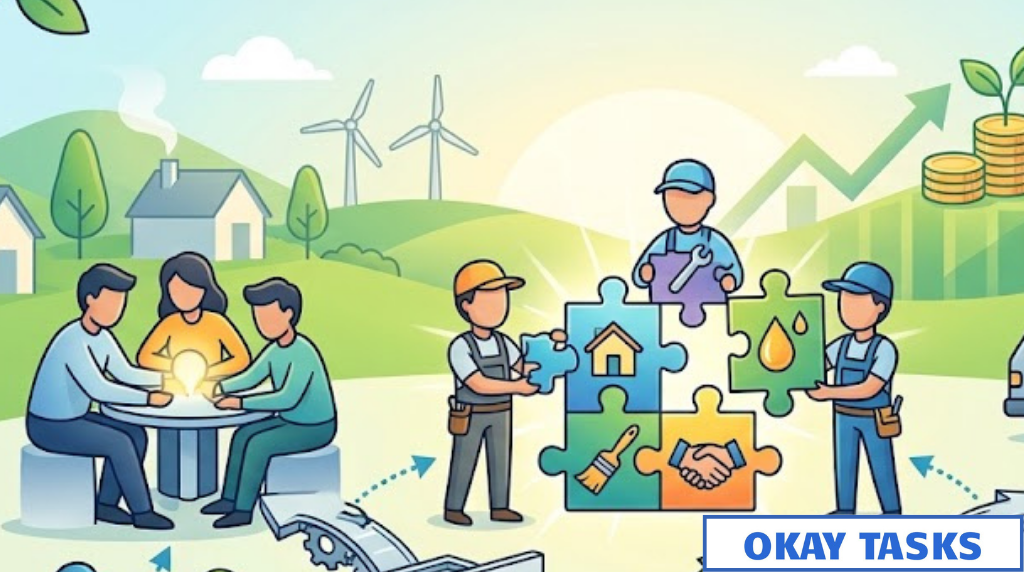
For consumer-facing home service platforms, relying solely on direct-to-consumer (D2C) marketing has become increasingly costly. Rising Customer Acquisition Costs (CAC), ad platform volatility, and seasonal demand swings make paid D2C acquisition a precarious foundation for sustainable scale.
To achieve durable growth, leading platforms are shifting focus toward B2B partnerships—forging strategic distribution channels with property managers, real estate firms, insurance providers, and corporate benefits programs.
1. Zero-CAC Volume and Instant Scale
Acquiring residential clients one homeowner at a time is an expensive treadmill. B2B partnerships transform this dynamic by unlocking aggregated demand through a single contract.
- Property Managers & REITs: Partnering with multi-family residential operators or real estate platforms provides instant access to hundreds of tenants needing turn-key move-in cleaning, routine maintenance, or turnover servicing.
- Corporate Wellness & Employee Benefits: Forward-thinking enterprises now offer subsidized home care and cleaning packages as part of remote-work benefits, creating bulk recurring orders.
According to market research from Technavio’s Home Services Analysis, institutional and commercial service contracts represent one of the fastest-growing segments in on-demand logistics. By embedding services directly into property management software or corporate benefit portals, platforms secure high-volume customer streams without paying single-user performance marketing fees.
2. Flattening the Churn Curve Through Subscriptions
D2C home services often suffer from episodic usage—a customer books a deep clean once or twice a year, forcing the platform to continually re-acquire them.
B2B partnerships convert transactional users into recurring revenue. Master Service Agreements (MSAs) with commercial real estate firms or short-term rental networks establish contractual, recurring schedules.
This recurring baseline stabilizes cash flows and significantly increases Net Revenue Retention (NRR). As noted in McKinsey’s B2B Commercial Growth Insights, hybrid models that integrate B2B channels consistently outperform pure D2C plays in retention and lifetime value.
3. Operational Efficiency and Route Density
For home service logistics, geography is margin. A technician driving 45 minutes between individual residential appointments spends more time in transit than generating revenue.
B2B contracts solve the last-mile density puzzle. Servicing a 200-unit residential building or an entire corporate office park allows platforms to cluster jobs geographically. Route density leads directly to:
- Higher daily job capacity per service provider.
- Reduced transit downtime and fuel overhead.
- Predictable scheduling that improves worker retention.
While D2C brand building remains valuable for top-of-funnel awareness, B2B partnerships represent the operational engine that turns gig-economy platforms into high-margin enterprise businesses. Investors and operators who prioritize institutional integration will build the most defensible, capital-efficient assets in the modern service economy.
Say Okay to Every Cleaning Task
Okay Tasks is the premier solution for residential and commercial cleaning in Malaysia. Whether it’s a last-minute on-demand request or a scheduled deep clean, the app connects you with verified vendors to ensure your space shines with professional excellence.