
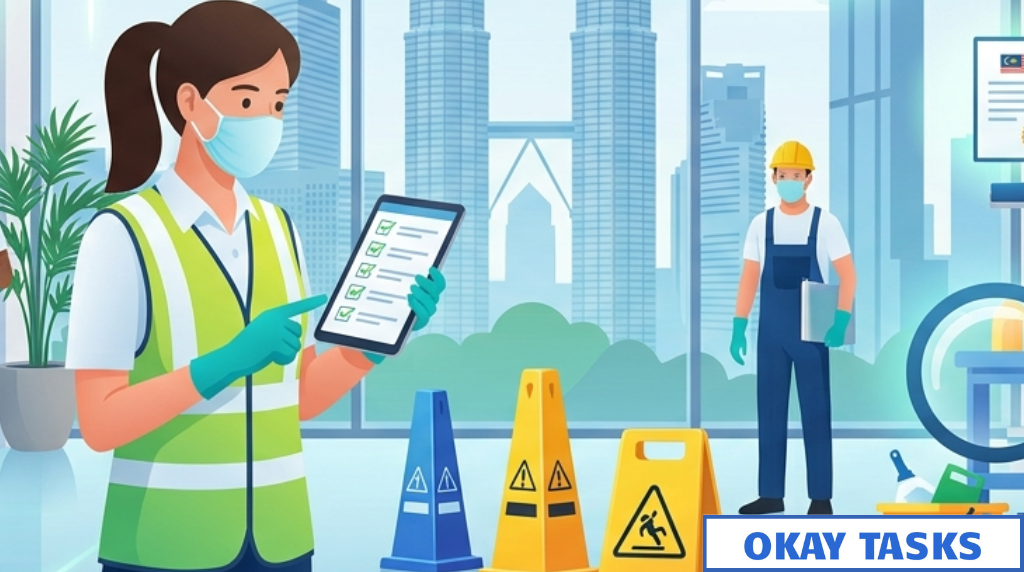
The cleaning services sector is frequently mischaracterized as a low-risk operational environment. However, personnel in this industry consistently interface with a complex matrix of occupational hazards.
As Malaysia updates its regulatory frameworks to align with international benchmarks, the focus on robust health and safety standards has intensified. For service providers, maintaining strict compliance is an even bigger legal obligation under the Occupational Safety and Health Act (OSHA) 1994, as well as a critical determinant of workforce retention, operational resilience, and corporate reputation.
The most common hazard in daily operations involves exposure to hazardous substances. The transition from basic detergents to heavy-duty industrial degreasers, descalers, and surface disinfectants introduces significant chemical risks, including respiratory irritation and chemical burns.
Under the Occupational Safety and Health (Use and Standard of Exposure of Chemicals Hazardous to Health) Regulations 2000 (USECHH Regulations), employers are mandated to conduct a Chemical Health Risk Assessment (CHRA) or utilize the Simple Risk Assessment and Control for Chemicals (SiRAC) methodology.
This framework ensures that all chemical inputs are systematically evaluated, that updated Safety Data Sheets (SDS) are accessible, and that personnel are equipped with appropriate Personal Protective Equipment (PPE) such as nitrile gloves and respiratory masks.
Beyond chemical management, physical and ergonomic hazards present substantial long-term risks to worker health. Cleaning tasks inherently involve repetitive motions, awkward postures, and prolonged standing, which can culminate in debilitating musculoskeletal disorders.
The Department of Occupational Safety and Health (DOSH) Malaysia highlighted this issue by releasing updated Guidelines on Occupational Safety and Health for Standing at Work.
These guidelines emphasize the necessity of administrative controls, such as structured task rotation, and the implementation of engineering controls, including anti-fatigue matting and ergonomically optimized equipment, to mitigate chronic physical strain.
Furthermore, acute safety risks such as slips, trips, and falls remain the leading cause of immediate workplace injuries within the sector. Executing cleaning protocols on wet floors, working at heights for facade maintenance, and navigating cluttered commercial environments require strict adherence to Hazard Identification, Risk Assessment, and Risk Control (HIRARC) guidelines.
Best practices demand the deployment of highly visible warning signage, the enforcement of slip-resistant footwear standards, and specialized training for high-risk operations like high-rise window cleaning, which are subject to stringent working-at-heights regulations.
Ultimately, cultivating a proactive safety culture yields substantial dividends for cleaning enterprises. Organizations that move beyond basic compliance to institutionalize comprehensive safety management systems experience lower rates of absenteeism, decreased insurance premiums, and improved operational efficiency.
By treating occupational health and safety as a foundational pillar rather than a bureaucratic hurdle, the Malaysian cleaning sector can elevate its professional standards, safeguard its essential human capital, and support sustainable economic growth.
Say Okay to Every Cleaning Task
Okay Tasks is the premier solution for residential and commercial cleaning in Malaysia. Whether it’s a last-minute on-demand request or a scheduled deep clean, the app connects you with verified vendors to ensure your space shines with professional excellence.